The Takeaway

In 2024 we uprooted our lives and moved from Colorado to the high desert. It was necessary.

I was shrouded in angst and despair – isolated, frightened, depressed.

So I moved, turning to a landscape where artists before found inspiration.

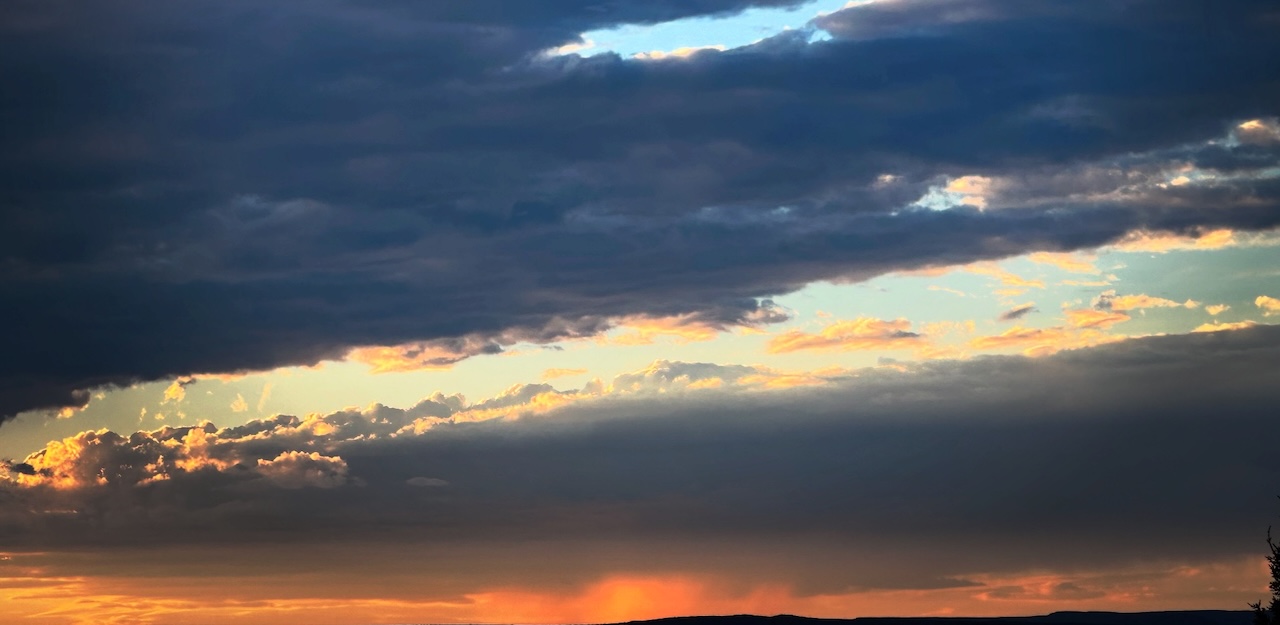
After a summer of insanely gorgeous sunsets and dramatic storms rolling over the mesa, I finally felt ready to pick up a project I had tried in fits and starts for several years.

I wasn’t by any means back to normal. But I found focus though the project and the land where I was located. I was going to move beyond my casual observations of the summer. The idea was to listen, really listen to the landscape. I felt it had something to tell me.

I was going to spend a year gathering an oral history of the land.
The Land Speaks

This isn’t a unique concept. I’m not so arrogant to think I’m inventing the wheel here. Artists, perhaps most famously Noah Kalina, frequently turn the lens on themselves for day by day works. Kalina’s project Everyday has been going on for more than 20 years . Mary Jo Hoffman spent a decade looking a the natural objects found around her, one daily photo at a time in her project Still.

Similarly, oral history considers how to gather narratives from entities other than humans. The book The Land Speaks applies oral history principles to landscape narratives. Here oral historians, drawing from work in environmental studies, argue that the land has a form of communication evident to those paying attention. Kathryn Newfont and Debbie Lee, the editors of the collection, argue “Nonhuman nature communicates, has a voice. Too often the voice has been marginalized, shunted aside, drowned out, silenced, polluted and ignored”  (14). They admit this is a radical principle, but they believe that oral history practice offers a space to learn and hear the land’s language.

The book served as the spark when I was initially conceptualizing this project. Each of the narrators and authors in The Land Speaks spoke not of interpreting the land but rather of using close observation and thick description to transform non-human language into something others can understand. The oral historian or landscape expert becomes “a kind of translator, relaying messages from the wilderness to its usually nonfluent visitors” (23).

For me, two questions emerged. What happens when I watch and listen with intent? What would I hear from the environment through prolonged observation?

Indeed the land speaks. But only if we (cliche alert here) are willing to listen.

Practicalities

If I was going to spend a year listening, I also needed to keep myself accountable. So I developed this website, with the ideas of posting my daily edited reflections at least once a week (more on that in a moment).

Each weekly page has space for video, photos, and a brief piece of text. I was intentionally stepping out of my comfort zone as a journalist to give the land space to talk. My observations are less journalistic reportage and more a type of participant observation. Field notes ended up being short almost poetic sketches that got at what I was seeing and feeling in a given week.

It was a tad artsy fartsy and definitely not the traditional five-ws-and-an-h journalistic narrative.

My conversation started at the autumn equinox.

The first week was obvious. The time of the equinox coincided with sunrise at my location. Each day I went out at the same time with different camera to shoot the nuanced changes from day to day. The question was how would things appear different depending upon the technology.

And I quickly ran into my first glitch.

Remember that “post a new webpage with a week’s worth of videos” idea? Week one had a date that went missing for nearly a year (more on that in the next screen).

So much for best intentions.


The Machine in the Garden

It would be too easy to call it a problem. I wanted to shoot with both cutting edge as well as what I considered dead technology. In this case part of the toolkit included mini-dv cameras and a point and shoot device that recorded videos in a 4×3 aspect ratio that was slightly fuzzy. None of that should matter, I thought. The land’s narrative would be unaffected by the shooting source – aside from differences in tone or screen size that I felt would tell me about how the natural world interacted with the technological. What I didn’t count on was the difficulty I would face in converting the dead tech into something that could be edited in 2025. 

Leo Marx discusses the pastoral tradition when talking about the landscape in the United States. It started with writers, such as Henry David Thoreau, and gets incorporated by painters who idealize the American landscape as a type of unspoiled Garden of Eden. The machine – in Thoreau’s case the steam engine – intrudes into the space, rendering it “spoiled.”

Photographers like Ansel Adams tweak the machine in the garden concept. Here, the landscape is represented as unspoiled and natural, but the images hide the machine necessary for their own construction.

It could be argued that this project, which largely hides the hand of the creator while using digital filmmaking tools to capture the oral history of the land, is doing something similar. But it’s complicated by the dead technology, which doesn’t spoil the garden as much as the illusion of the invisibility of the machine. The editing challenge became a part of the oral history. 

As a result, the project directly engages in the tension between the machine and the garden. This is unlike Thoreau, who framed his time at Walden Pond as an escape from the machine, or Adams who with Nancy Newhall needed the “tongues of angels” to fully describe images of the wildnerness (84). The attempt here is to understand the conversation nature and technology are having with each other, as mediated by a creator.


In this year the earth has shown me that my conclusions and interpretations aren’t really relevant.

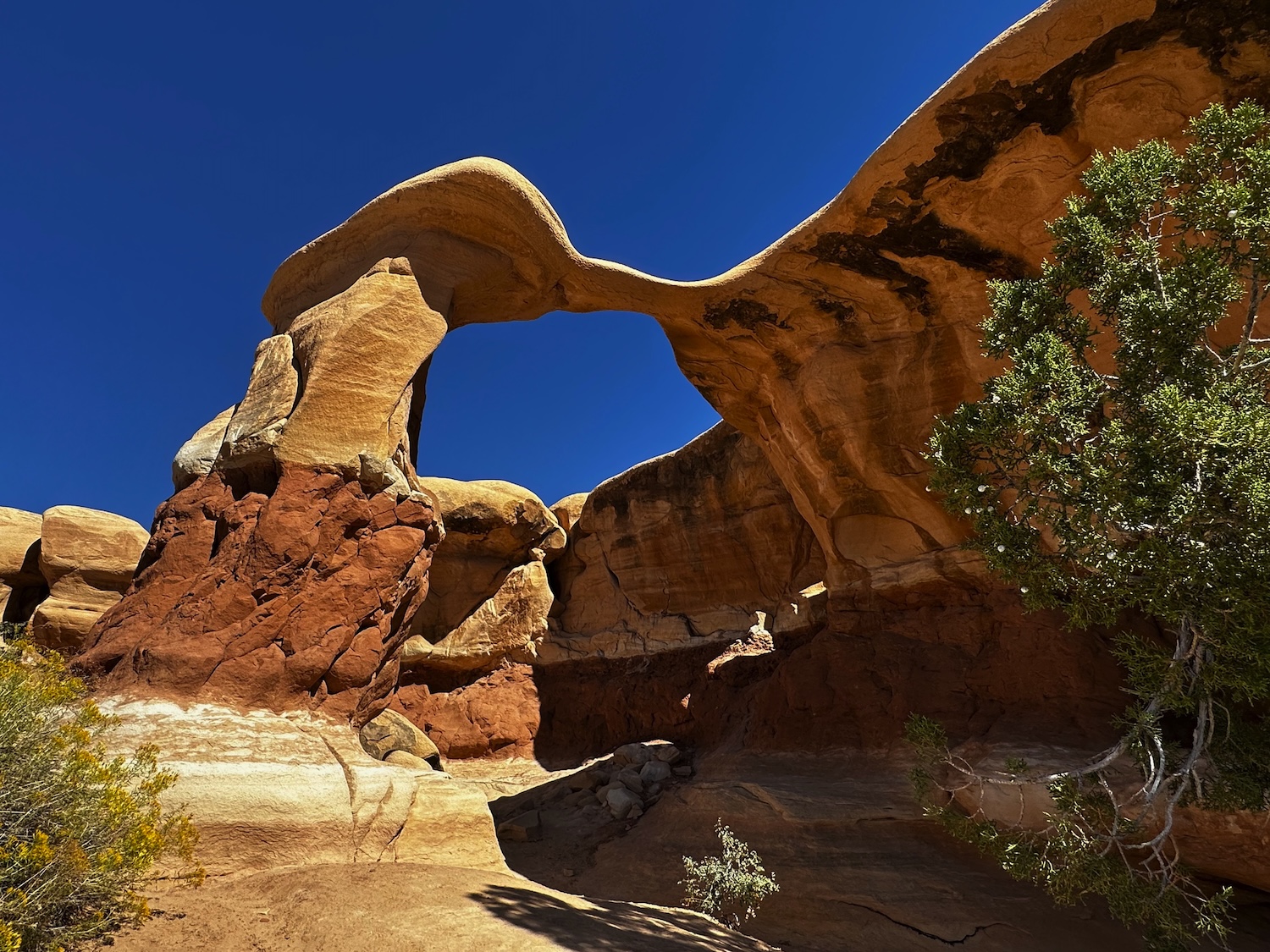
It’s more about sharing my day by day experiences so others can come to their own understanding of what the earth is saying.
Order

Something I’ve learned this past year: I really crave order.

Maybe it’s because of all the shit I’ve been going through. Order makes things a bit more safe. Predictable. Less scary.

But demanding order is a major problem when you’re tying to listen to something that doesn’t really speak in the semiotic framing of words structured in traditional sentences.

As week one was ending I was becoming increasingly more anxious for reasons that had nothing to do with inaccessible mini dv footage. I was shooting every single day from the same space at the same time. Practically I knew that couldn’t be sustained for a year. I had trips planned which would take me out of the area.

While the landscape where I initially shot is dramatic, I also wondered if it could sustain a year’s study. Would there be enough for it to say? Plus, did I only want to shoot the light at dawn? There were so many other fascinating times of day. Exhibit A: those devastating summer sunsets.

And then on day eight I accidentally slept in. And saw the interplay of shadows when I awoke.

Eight days in I realized that the one time/one location model not only didn’t work for me – it also didn’t work for the natural world. It had a story it was trying to tell me that wasn’t constrained by location or time. The landscape, through a subtle interplay of shadows, directed me to a different narrative.

As Newfont and Lee note, this is an expected consequence of close listening to the land: “Beyond-human nature shares our ability to relate. Like any human being, the world of nature has agency of its own. It lives. It acts . . . It also speaks to those who will learn to listen” (26).

Not to get all Law and Order-y here, but in the human/nature construct there are the people who try to constrain things and the environment that resists those boundaries.

This project reveals those stories.

New Topographics

The end result is the land forces me to consciously and intentionally accept the unpredictable. Even when the unpredictable is due to the actions of humans on the land.

In the 1970s, a group of photographers were part of a show at the George Eastman House in Rochester. The New Topographics was groundbreaking. The 10 photographers, all but one male (Hilla Becher collaborated with her husband Bernd), intentionally attempted to deconstruct the human/nature divide found in photographs by people like Ansel Adams and Eliot Porter. Instead, they looked at human interventions on the land, insisting that “nature and humanity were interwoven” (Foster-Rice and Rohrbackh 2010, xvii).

This theme recurs in my own work.

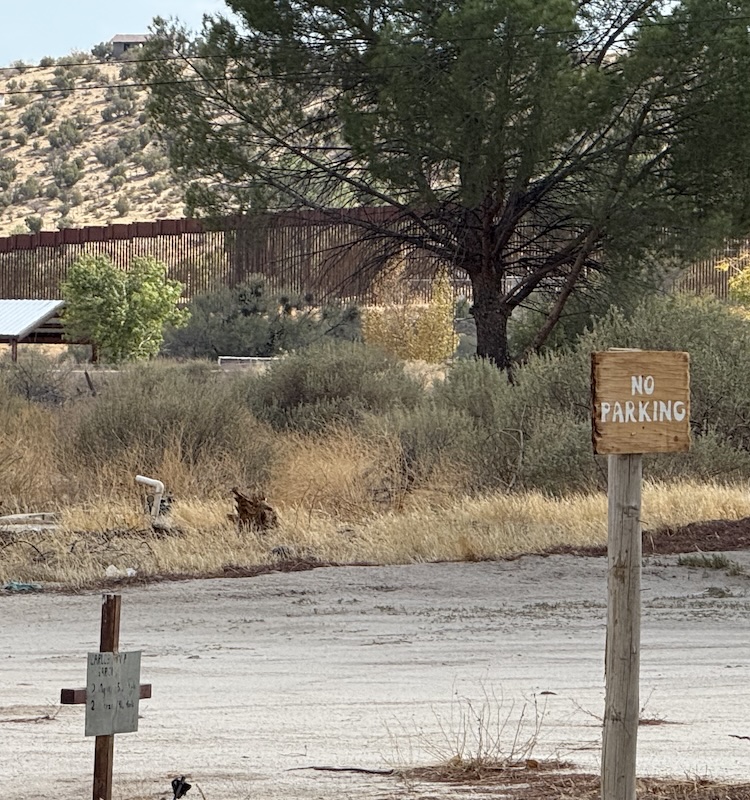
Consider a road trip in late fall of 2024, shortly after beginning the project. I’m a passenger. My friend Mel and I are heading to Salton Sea via Calexico. We take a detour to a restaurant/hotel/spa she read about on Atlas Obscura or something. We come over a ridge and it’s there. The border wall.

It rises over the road, casting a literal and figurative shadow. It’s bound in politics, of course, but the metal frame also interrupts the landscape.

As in The New Topographics, the wall makes “amply clear the contradiction between the myths of the American landscape – it’s expansive ’emptiness’ and its potential for renewal – and its present condition” (Foster-Rice and Rohrbackh 2010, xxv). Here in the far southwest, I see the land echo Greg Foster-Rice and John Rohrbackh’s contention that the value of contemporary landscape imagery “lies not with any simple elucidation of an exhausted landscape but with recognition of the fact of coexistence” of human and nature (xxv).

This project is 50 years removed from the New Topographics exhibition. But the land forces me to incorporate history as I help to tell its story. 


Patterns

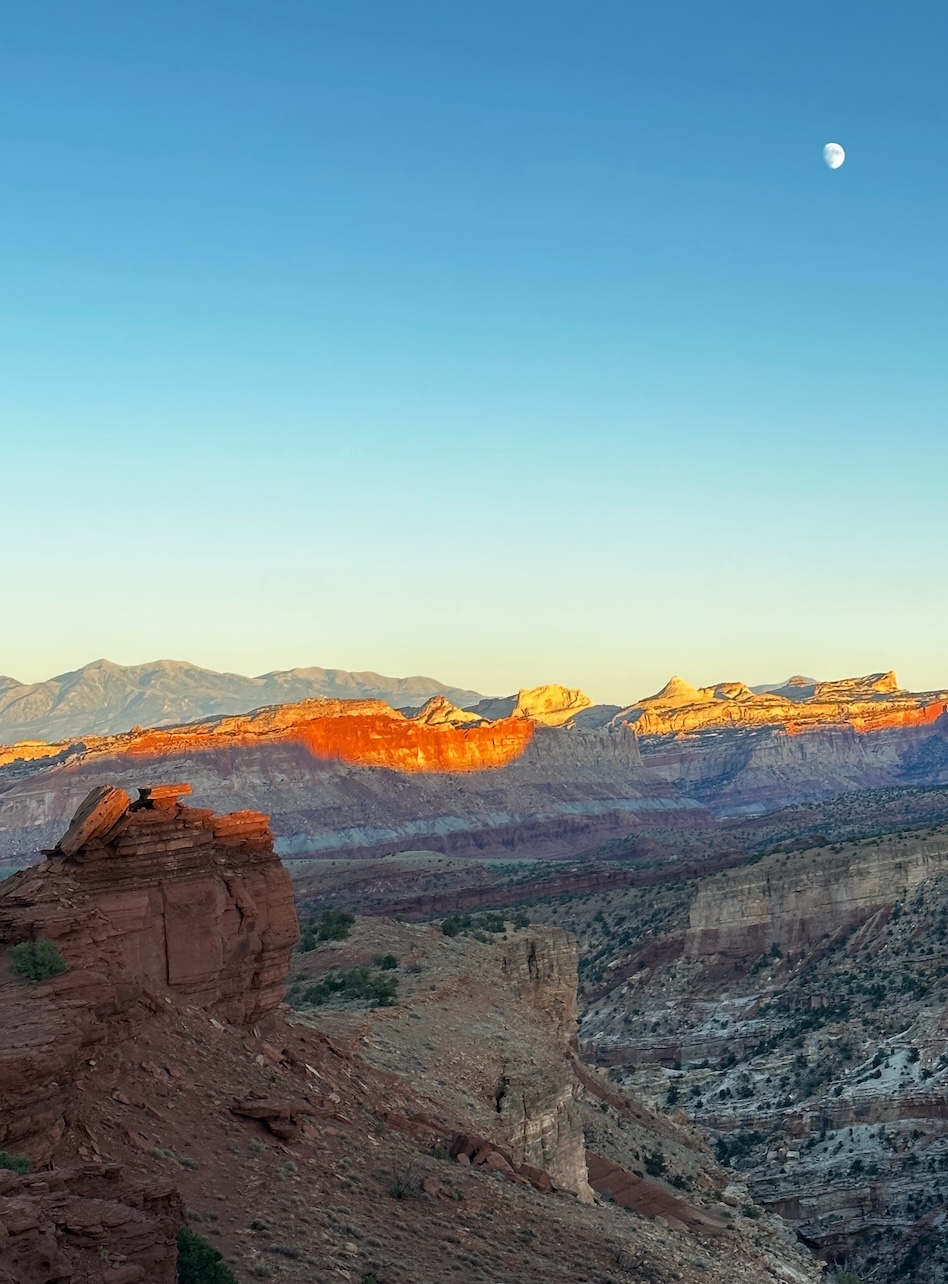
In a year of images one thing recurs: those incredibly gorgeous sunsets. They feel too easy, too expected. Yet I still turn my lens over the mesa to watch the sky paint extravagant colors.

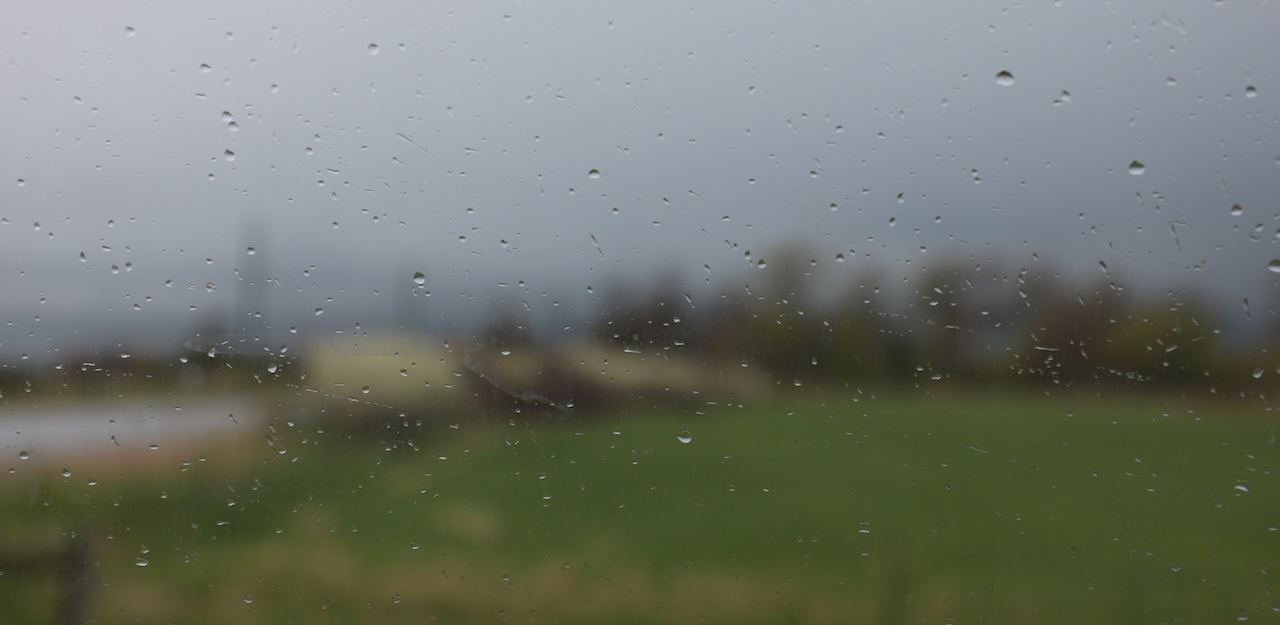
It’s not just sunsets that catch my eye. The sky beckons. Clouds share stories that shift with the seasons. The heavy low ones that almost touch the ground during monsoons. Others streak or look like puffs of white. Their scientific names don’t matter in this narrative. The instead are telling me what to expect in a day. 

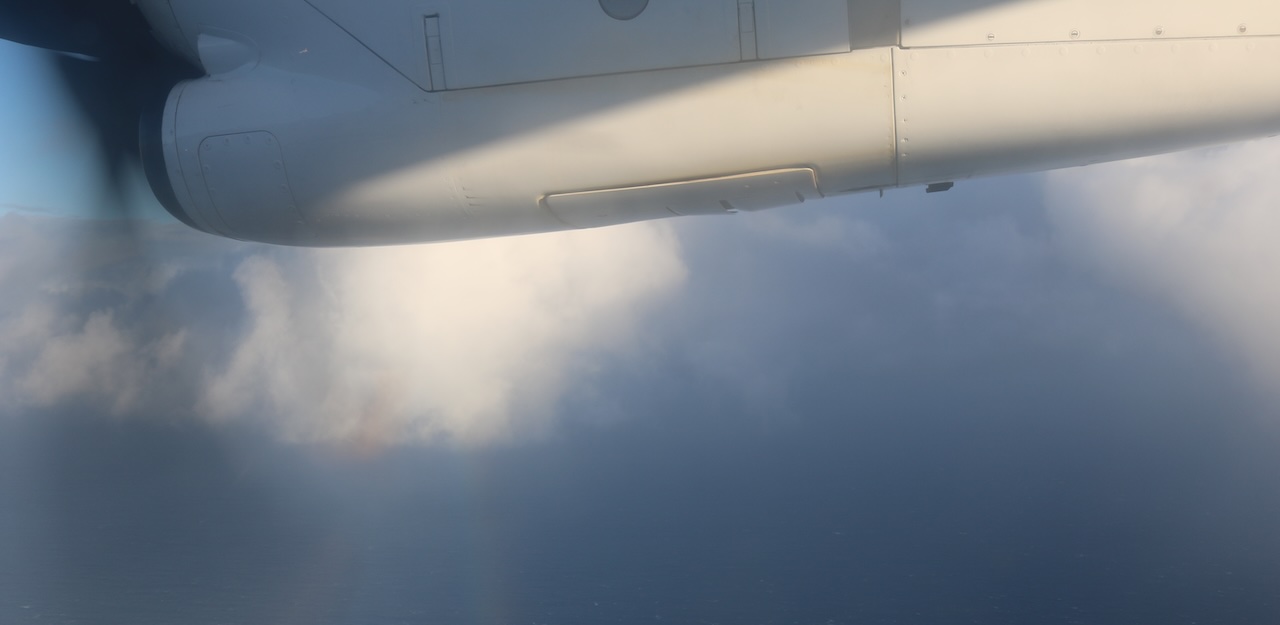
As I’m writing this I’m 30,000 feet in the air crossing the continent east to west. Tracking my flight are two jets, contrails streaming white behind. Another type of cloud – contrails. A third jet zips past heading east, seemingly going at an impossible speed.

Seeing the landscape from above changes things.

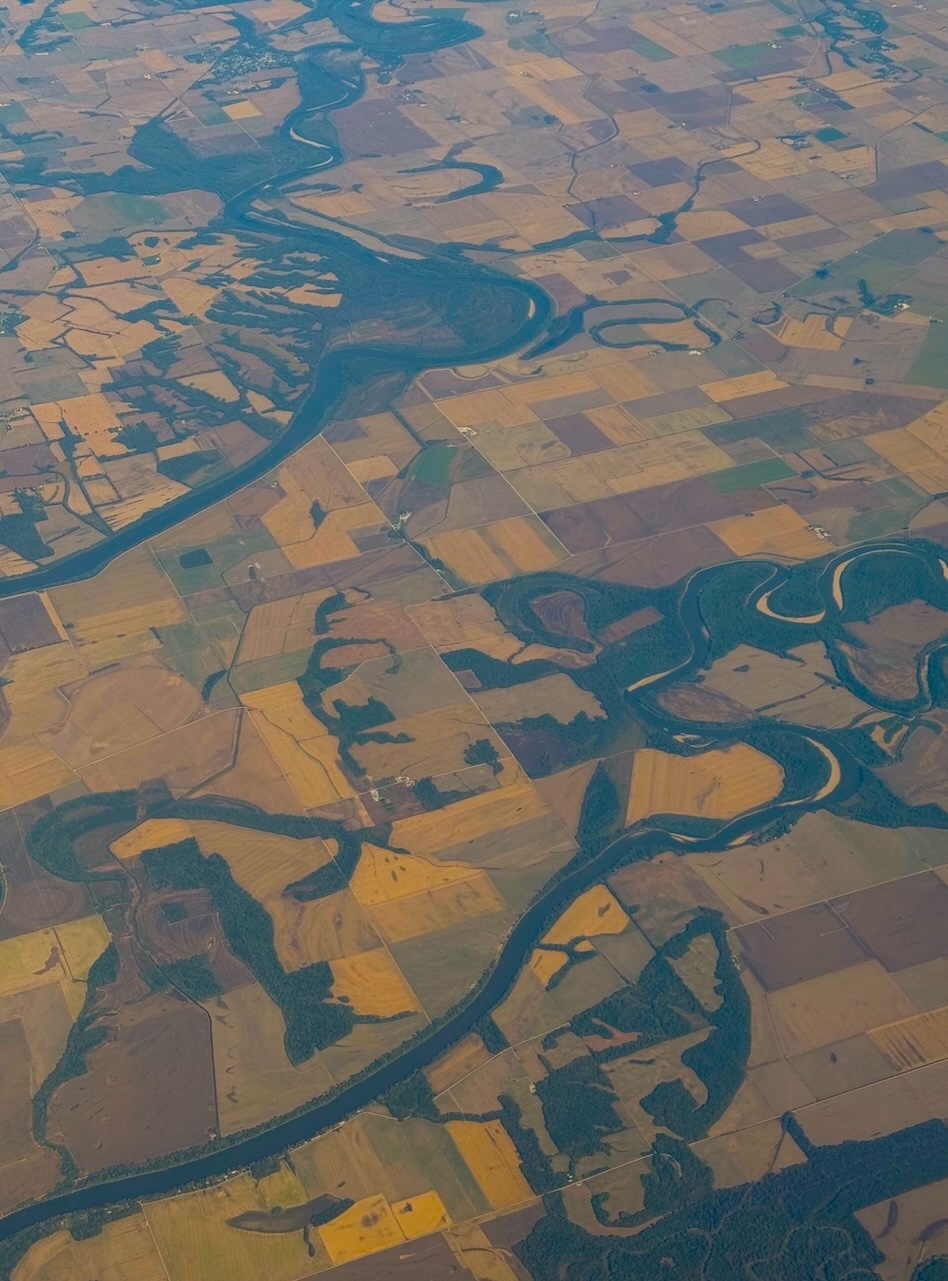
I don’t mean observing the patterns that appear due to human attempts to constrain or control the land. Of course they’re there. Human interventions are almost entirely geometric. Circles. Rectangles. Lines etched into the terrain forming an xy axis.

I look down and a highway snakes along a river in the desert. Patches of green form a perfect grid to the south, hugging where irrigation provides sustenance. If I’m in the right place (or maybe squint hard enough), I can even see that border wall.

On the days I’m 30,000 feet up it would be easy to take a day off and say, ‘Oh, nothing to see or hear.” After all, I’m not on the land’s level. Distanced. Looking down. But the land doesn’t necessarily think that way. Instead it shows me patterns that I follow. Clouds and technicolor skies. Contrasts of light and dark. The insanely bright blue wash that switches to enveloping puffs of white a few hundred miles later.

I think back to another trip a few years earlier. The plane was above the cloud line. Late summer. Storms. I swear I saw lightening going from the clouds up to the open sky above.

Maybe I was tired and hallucinating. Maybe lightening wasn’t shooting upwards into the sky.

Or, maybe the land is pointing me toward something other than only focusing on the human/nature intersection. Instead, it’s also leading me to its unpredictable colors, folds, and projections.


It’s a year later. September 22, 2025. Midday, because that’s when the Autumn Equinox hits this year.

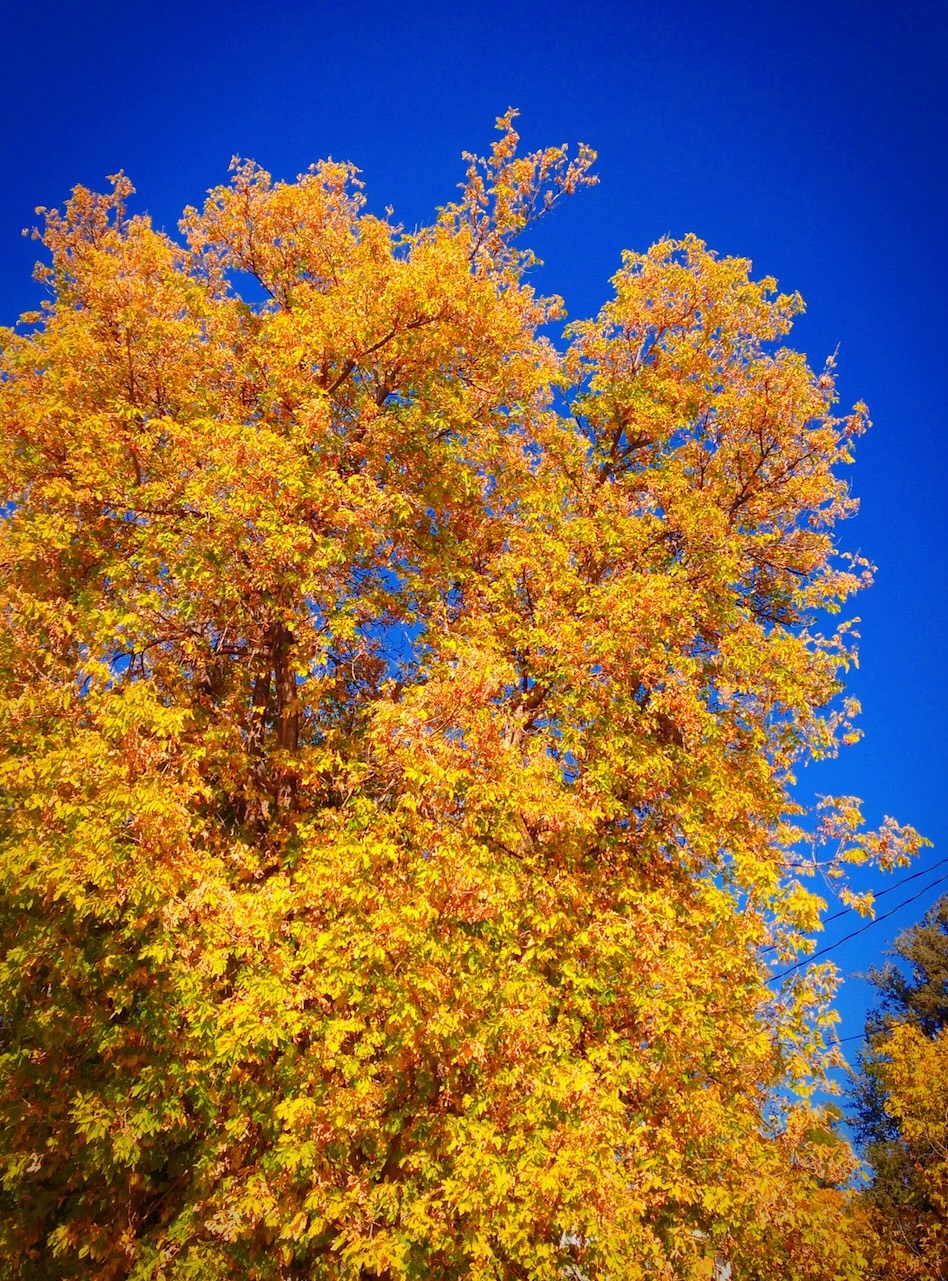
It’s one of those days that screams fall. The sky is an insane blue that almost seems unreal. The air is graced with a touch of crisp. Puffy white clouds dot the sky. Trees are beginning to turn. Maroon. Chartreuse. Yellow. Orange. Red. Green.

And I think about what the land has told me.

Unlike human narratives, where we try to make sense of our lives, the land is. It asks us to pay attention to its patterns and changes, but it doesn’t try to tell us a story about them. Like the equinoxes and the solstices, the rhythms that framed this project, the landscape’s story is one without a linear beginning, middle, or end.

The land reminds us that our human attempts to control the narrative and make sense of everything may not matter. Being does.

Here’s the thing that drives me nuts about narratives about the natural world: it’s always about how it makes us as humans better. We get healed from the ravages of society, either by dropping out á la Thoreau or by finding salvation in nature’s unspoiled temples á la Adams.

What if that’s missing the point?

My year listening to and watching the land didn’t bring me any huge revelations about myself. It didn’t heal me from my personal trauma. I’m still sad and angry, occasionally gripped by fear or despair.

But maybe it wasn’t about me coming to some big epiphany.

The land didn’t change me. And I didn’t change it. Instead its oral history was about being present. Listening. Watching. Taking time. Listening to nature means getting outside of myself.

The land may be dramatic, but it’s also quiet and self contained. It doesn’t really care about us humans. It does its thing with slight — or sometimes extraordinary — variations every day.

It’s up to us to pay attention.
The year is done. I’m strangely bereft. I wonder if I should continue this formal and formatted intentional listening. Even as I consider, the land speaks.

TaylorCatProductions

2024-2025